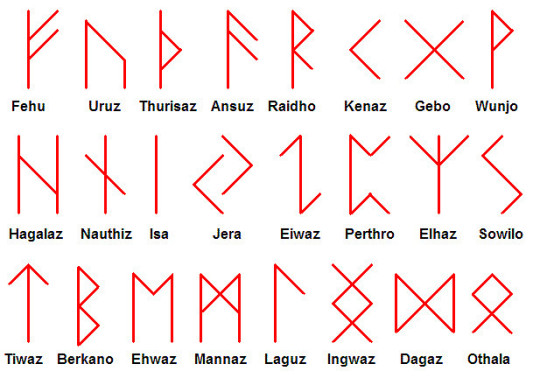
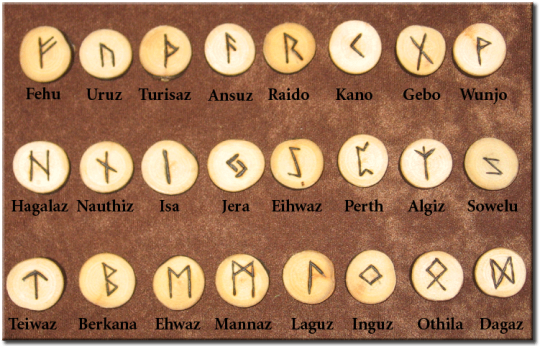
if you work with or have done research on the Elder Fuþark runes, you may have noticed that there are lots of variations on the names. & i mean LOTS, e.g.:
there are a couple of reasons for this:
HOWEVER, most actual runic inscriptions in the Elder Fuþark are actually in Proto-Norse, the intermediate stage between Proto-Indo-European and Old Norse. A lot of the discrepancies between the attested names & their names in other Germanic languages (i.e. Gothic and Old English) is due to this fact (Orðstírr has a good intro to Proto-Norse sounds especially re: runes)
modern English is missing many of the sounds and letters that existed in early Germanic languages, so variant spellings are different ways of rendering them in our limited 26-letter alphabet
many sources on runes come from magickal writings from many decades ago, and because language science is constantly evolving, so has our reconstruction of Proto-Germanic. thus, many of the names are based on outdated reconstructions.
most magickal writings on runes are not written by historical linguists who study ancient Germanic languages
luckily i regularly study & use Proto-Germanic, & based on our most recent & accurate reconstructions, the names for the Elder Fuþark would have probably taken the following forms (text in /slashes/ is IPA phonemic transcription; where names are different, this is due to differring names in the different attested langauges, or variation within Proto-Germanic dialects):
if you would like more in-depth explanations for each of these, HERE is a good source (where we differ, i’d note that this source leans heavily on the Norse variants because our oldest attested uses come from Proto-Norse)




 kluskiwszechmocy