You can browse the most popular ones or search for certain colors, themes, and even specific hex codes!
When you find one you like, you can download a wallpaper swatch of it and also select the specific colors it uses to look at more palettes that use those same ones.
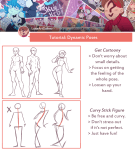
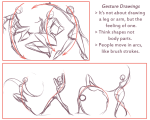
This one was a short weekly tutorial briefly talking about gesture drawing, shapes and how to reference. Next week I’ll do a reference sheet with dynamic poses, I didn’t get to it this week cause I ran out of time. Anyways I hoped this helped some people!
Yo! Get full access to all my tutorials/references through: Patreon:
[https://www.patreon.com/lunaartgallery] or Paypal Order: the 10$ package will get you 15 items of anything available on my Patreon, emailed directly to you.
At the time of Vladimir the Great many
religions filled Kievan Rus; Norse Paganism, Judaism, Islam, Christianity and
many others but most importantly Slavic Paganism. Vladimir sought
to strengthen the Rusians by unifying their religion under an official
pantheon which may have been a blend of Slavic, Norse, Turkish, Baltic
and Greek deities. Vladimir had six statues erected in Kiev dedicated to the
Slavic deities: Perun, Dazhbog, Stribog, Khors, Simargl and Mokosh; several
others were also raised throughout the realm.
As you will soon read, much of the knowledge
that we have of Slavic paganism comes from sources dated to a late period of
Slavic history so by the time that we attained detailed writings describing
their religious beliefs, Kievan Rus had already experienced deep inspiration
from other faiths, Norse and Greek mythology especially. Much like the Norse,
the Slavs believed in a cosmological universe in which a Great
Tree connected the many realms of man, gods and spirits. Its roots
sunk to the underworld and its branches reach the heavens. At the tree’s center
lay the realm of man and the gods which is encircled by a vast sea that lead to
the land of the dead.
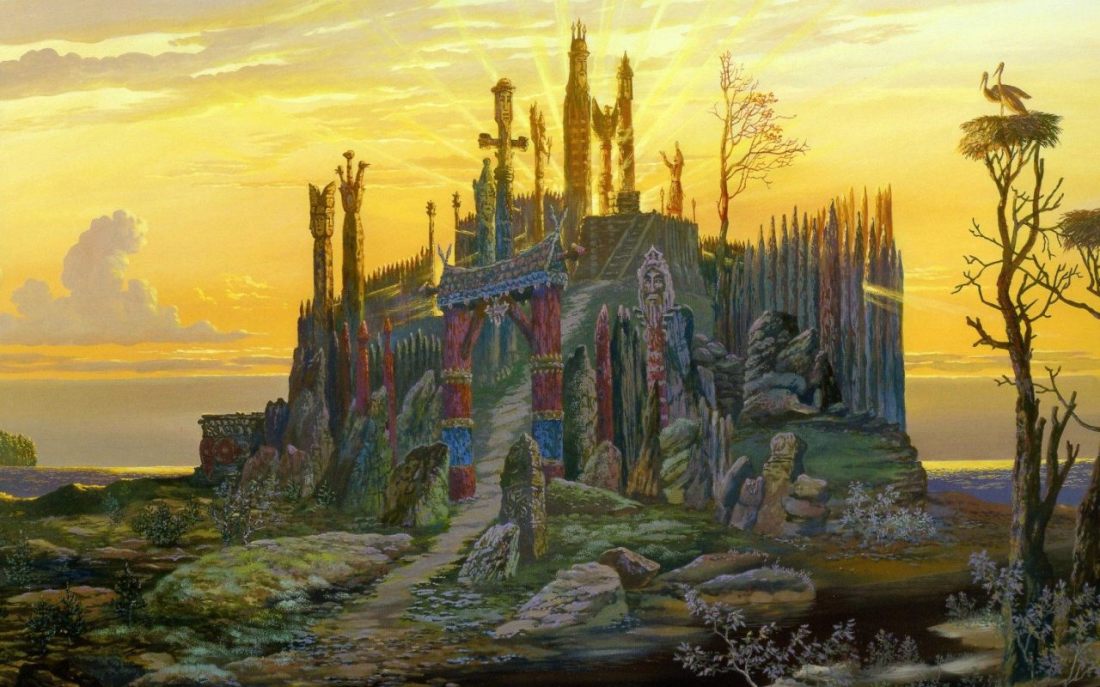
^ Idols by Nicholas Roerich.
Svarog was
a solar deity of fire, the forge and blacksmithing whom is often compared to
the blacksmith deities like Greek Hephaestus and Roman Vulcan and solar deities
like the Greek Helios and Roman Sol. According to the Hypatian Codex man fought
solely with clubs and stone until Svarog’s smithing prongs came down from the
heavens and granted man with the knowledge of metallurgy and blacksmithing.
Part of the creation story speaks of a magical rock at the bottom of the ocean,
it is believed that the goddess Živa in the form of a great duck brought it up
to the surface and when Svarog had obtained or taken it from her, he struck it
with his hammer.
^ Ships on the Dnieper by Nicholas Roerich. Idols in the background.
From the sparks Semargl (god
of fire) was born; from the winds created by the swinging of the hammer was
birthed Stribog (god of the wind); from the loud clattering
and pounding echoes created by his hammering Perun (god of
lightning, thunder and storms) came forth; from his sweat sprung Veles (trickster
god of the underworld). There are actually two realms mentioned as an
afterlife, that of the heavens which was ruled by Svarog and was named Svarga
(inspired by the Norse Asgard) and the one ruled by Chernobog or Veles named
Nav (inspired by the Greek Elysian Fields). The stone was then hidden behind
twelve pillars that separated the world of the living and that of the dead, within
the circle of pillars the Great World Tree rose. Živa (the duck that brought
the stone up) was angered at Svarog’s theft of the stone so she summoned great
serpentine dragons which long warred with Svarog, Perun and other heavenly
deities.
^ Svarog’s Square or Star of Rus’.
Each tribe and people favored some gods over
others and each deity’s significance waned through time so there was no set
head of the Slavic pantheon. Under the rule of Vladimir, Perun (“thunder”
or “lightning bolt”) was made the most important deity in the Slavic
pantheon. Perun was the son of Svarog and his birth is said to have been
heralded by a great earthquake. Perun was chiefly the god of
thunder, lightning and storms but he was also a god of war.
Perun wielded an axe or hammer that
could be thrown and returned back to him like the Norse god Thor’s Mjölnir,
Perun was also armed with thunderbolts (made from stone) like the
Greek god Zeus and the Roman god Jupiter. Perun rode on a chariot pulled
by a goat, similar to Thor’s chariot which was pulled by two goats named
Tanngrisnir and Tanngnjóstr. Oak trees are the most frequently
to be struck by lighting and because of this many gods of lighting and thunder
have been associated with it like Slavic Perun, Celtic Taranis, Greek Zeus and
Norse Thor.
“Vladimir began his reign in Kiev alone
and erected idols on the hill outside his palace with porch: Perun of wood with
a head of silver and mustache of gold.” – Russian Primary Chronicle.
^ The scheme of the pagan shrine discovered
at the Peryn island.
Perun is also a deity of purity,
order, justice, the mountains and fire. Perun is seen in in many cultures
with similar names as far south as Illyria (Adriatic Coast) and Thrace
(Balkans), as far north as Finland and west to the Baltics.
^ Drawings of Slavic axe amulets based on
archaeological findings dating between the 11th and 12th century.
“For they (the Sclaveni and the
Antae) believe that one god (Perun), the maker of
lightning, is alone lord of all things, and they sacrifice to him cattle
and all other victims; but as for fate, they neither know it nor do
they in any wise admit that it has any power among men, but whenever death
stands close before them, either stricken with sickness or beginning a war,
they make a promise that, if they escape, they will straightway make a
sacrifice to the god in return for their life; and if they escape, they
sacrifice just what they have promised, and consider that their safety has been
bought with this same sacrifice.” – Excursus (“digression”)
Book VII by Procopius of Caesarea.
Novgorod was a major center for Slavic
paganism and within its domain was the Island
of Peryn, on said island there was a great religious center known as the “Heathen
Shrine” which was built in 980 CE by Vladimir’s uncle Dobrynya who ruled
over Novgorod and was dedicated to Perun.
^ The shrine of Peroun on Peryn Island, a
conceptual self-made reconstruction.
“In the year [980] Vladimir
appointed his uncle Dobrynya to rule in Novgorod. And Dobrynya came over in Novgorod. [And
he] set up an idol of Perun above the Volkhov River [i.e. on a
high bank], and Novgorodians offer him [Perun] sacrifices as to a deity.” – Russian Primary Chronicle.
”Novgorodians, when they were pagans, had
an idol called Perun, i.e. the god of fire, as Russians call fire “Perun”. A
monastery is erected now in the place where the idol stood, and the monastery
holds the name of the idol and is called the Perunic monastery. The deity looks
like a man with a lightning- or ray-shaped flint in his hand. Day and night
they kept an eternal flame burning with oak firewood as a sign of worship to
the deity. And if the priest of the cult allowed the fire to go out
accidentally, he was put to death.“ – Travels of the Ambassadors
sent by Frederic, Duke of Holstein, to the Great Duke of Muscovy and the King
of Persia, 1656.
“After traversing this place, they reach
the island called St. Gregory, on which island they perform their sacrifices
because a gigantic oak tree stands there; and they sacrifice live cocks.
Arrows, too, they peg in round about, and others bread and meat, or something
of whatever each may have, as is their custom. They also throw lots regarding
the cocks, whether to slaughter them, or to eat them as well, or leave them
alive.” – Emperor Constantine VII Porphyrogenitus explaining the
voyage taken by the Rus from Kiev to Constantinople.
The antagonistic rival of Perun was
a dragon- or serpent-like being named Veles (who also took the
form of a wolf, a bear and various other animals) that lived under the Great
World Tree, showing parallels with the Norse belief in a large world tree
called Yggdrasill and a giant serpent that dwelled under it named Nidhogg.
Veles was the lord of wild animals, domesticated ones (especially
cattle), and shepherds – the last of which would pray for their lost
or stray beasts to find their way back home. Another reason for their conflict
was the fact that Veles was a god of shepherds, herds and cattle while Perun
was that of rain and farmers.
As a tempter and trickster
deity he was known for climbing up the world tree every year and
taking Perun’s cattle, wife and children; the second of which (Perun’s wife
Mokosh) is spoken of in some versions of the tales as willingly going with
Veles whom had been tempting her since before her and Perun were married. Mokosh was
the fertility and mother goddess of the eastern Slavs, especially that of women
as she was seen as their protector in everyday life and in childbirth,
supporter of their works, and decider of their destiny. Mokosh was the
only female deity included in Vladimir’s pantheon and his sanctuary of statues
in Kiev, she was seen as a solar deity so when she was seen in the skies
she was with Perun and when the sun sets she is with Veles.
^ The modern statue of Veles on Velíz
mountain, Czech Republic.
Perun would pursue Veles in response for him
taking Mokosh from him, all the while attempting to strike Veles with
thunderbolts. As Veles would hide in order to escape Perun’s thunderbolts,
places or things struck by lightning were believed to have been where Veles was
concealing himself. Storms in the heavens were believed to have signified that
the two were in conflict with one another and spring was thought to convey that
Perun had defeated Veles and chased him back to the underworld.
Veles was the reaper of souls and lord
of the underworld; the underworld he ruled over was a paradise,
a vast expanse of lush green pasture, plains and meadows where the deceased
were tasked with watching over his herds – this paradise is believed to have
been inspired by the Greek paradise referred to as Elysium or the Elysian
Fields. Veles punished and caused diseases to those whom break oaths (similar
to Norse Nidhogg) and, although Veles is often seen as a malevolent being, Veles
and Perun worked more in a yin and yang-like capacity but with the
influx of Christianity Veles was later demonized and compared to the Devil.
Veles was also a patron of
musicians, wealth and commerce; the last of which is evidenced by the fact
that statues of him were often stationed in marketplaces and that treaties,
agreements, and legal documents were authorized by invoking his name and
declaring an oath to him:
“Thus the Emperors Leo and Alexander made
peace with Oleg, and after agreeing upon the tribute and mutually binding
themselves by oath, they kissed the cross, and invited Oleg and his men to
swear an oath likewise. According to the religion of the Russes, the latter
swore by their weapons and by their god Perun (god of thunder and
lightning), as well as by Volos, the god of cattle, and thus confirmed the
treaty.” – Russian Primary Chronicle, Oleg’s Rus–Byzantine War
(907).
Similar to many other cultures, the Slavs
too believed that during winter the spirit world and that of the living
were closest to one another. The Slavs celebrated this moment through
an event called ‘Velja Noc (Great Night)’ which was the last
day of the year and the first of the new one. The spirits of the deceased were
allowed to leave the underworld and visit their living relatives; they would be
welcomed into the households of said relatives and given gifts. Like
Halloween, people would dress up in costumes consisting of masks and coats
of wool (a physical characteristic of Veles). These participants would then go
from village to village singing songs and, mimicking the actions of the
spirits, they would be welcomed by the inhabitants of the households they
visited and were given gifts in exchange for good fortunate in the new year.
On the ‘Velja Noc (Great Night)’ Perun’s
twin offspring named Jarovit (god of spring, vegetation and
fertility) and Morana (goddess of winter, the moon and death) were born, Veles
took Jarilo to the underworld where he raised him. When he first set foot back
on the realm of the living he met his twin sister Morana, this
return is celebrated by a springtime festival. Jarovit’s spring
festival was celebrated by parades of caroling young people carrying
lush leafy branches, flowers and straw dolls; these young celebrators would
visit households where they would bless the inhabitants. The youthful
participants and the thriving vegetation all symbolized life and fertility
while the symbolism of winter (i.e. Morana) dying was enacted by their carrying
of straw dolls which they would tear apart, burn and then throw into a body of
water (since the afterlife was beyond the sea).
The marriage between Jarovit (god of spring,
vegetation and fertility) and Morana (goddess of winter, the moon and death)
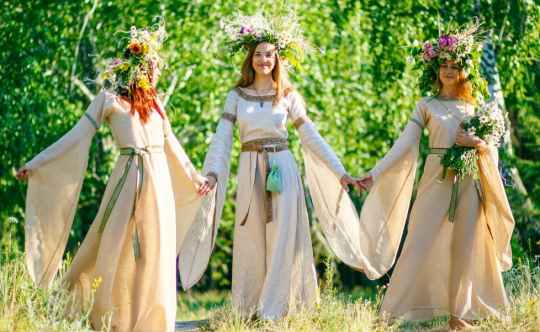
would mark summer and would be celebrated through a festival
which included feasts, drinking, dancing, bonfires (and the act of jumping over
them), girls making wreaths of fern and flowers (which they would let flow down
the river and foretell their marrying), ritual bathing as symbols of
purification and maybe even nude bathing and orgies (though the latter are
argued to be propaganda) – this is when harvest was at its peak.
The union of the two (Jarovit and Morana)
was seen as a peaceful end to the conflicts between Perun and Veles since their
two “children” were romantically involved. In the end Jarovit is killed for
being unfaithful to Morana and in death he returns to the underworld, his death
however is just a symbol for the end of the warmer seasons and harvest time
when the crops are cut down and stored. Upon Jarovit’s death the world falls
into a cold, infertile and dying state (autumn and winter) but he would
return to the world of the living (bringing back spring) and eventually
reconcile with her (summer) – this is how they explained the changing of the
seasons.
^ Effigy of Morana, Czech Republic.
Chernobog, meaning
the “Black God”, was the god of darkness, curses, decay, and woeas
well as a lord of the underworld. Chernobog was mostly worshiped
by the Western Slavs whom believed that he brought on the demise of the sun by
bringing forth darkness and shortening the days. Chernobog was also believed to
have been responsible for the frost and frigid chill, his servants were wolves
which heralded snowstorms and bears which foreshadowed blizzards. Because of
his many attributes, Chernobog was associated with the shortest day and longest
night of the year (Winter Solstice). This night was referred to as
Korocun and was celebrated by having feasts which the deceased could
take part in and by lighting fires in burial sites so the
deceased could be kept warm.
“The Slavs, too, have a peculiar custom.
At their feasts and carousals they pass about a bowl over which they utter
words, I should not say of consecration but of execration (curses), in
the name of the gods — of the good one, as well as of the bad one — professing
that all propitious fortune is arranged by the good god, adverse, by the bad
god. Hence, also, in their language they call this god of woe Diabol, or
Zcerneboch, that is, the black god.” – The Chronicle of the Slavs
by Helmold, Priest of Bosau.
The concept of a good and evil deity was
foreign to the Slavs who believed in duality so it is believed that those
concepts were brought to them by the nomads of the steppe and the Islamic
nations which were both influenced by Iranian cultures (Persian and
Scytho-Sarmatian) and religion (Zoroastrianism). Some of the Slavic deities
are believed to have come to them this way. One of these deities, which was
also incorporated into Vladimir’s pantheon, was Simargl. Simargl
was a Slavic deity that is believed to have been inspired by the Iranian
Simurgh, both were griffon-like mythological creatures with the body of a
dog.
The Iranian Simurgh was a very popular
artistic symbol found throughout the Middle East; a giant and powerful creature
with feathers which had miraculous healing properties (like a phoenix) and, if
a feather is burned, Simargl could be summoned. The Simargl was the guardian
of the Tree of Life and when Simurgh flew or shook its wings the
tree’s seeds would disperse and pollinate the earth; these seeds give rise to
all of the world’s plants. The Simurgh lived for 1700 years and attained vast
knowledge of the world which he would bestow upon the worthy. The Simurgh was
similar to the more commonly known phoenix which would perish into a
magnificent fire and be reborn from the ashes.
^ The Sassanid Persian Empire’s Royal
Symbol.was the Simurgh.
According to ‘The Conference of the Birds’
(a Sufi epic poem), written by the great Sufi poet Farīd ud-Dīn Attar of
Nishapur, the birds of world sought to find a great bird to lead them
spiritually (sheik) but are told that they already had one, the Simurgh.
“The world’s birds gathered for their
conference And said: “Our constitution makes no sense. All nations in the world
require a king; How is it we alone have no such thing? Only a kingdom can be
justly run; We need a king and must inquire for one.”” – The
Conference of the Birds.
“We have a king; beyond Kaf’s mountain
peak. The Simorgh lives, the sovereign whom you seek, And He is always near to
us, though we Live far from His transcendent majesty. A hundred thousand veils
of dark and light Withdraw His presence from our mortal sight, And in both
worlds no being shares the throne That marks the Simorgh’s power and His alone
– He reigns in undisturbed omnipotence, Bathed in the light of His magnificence
– No mind, no intellect can penetrate The mystery of his unending state: How
many countless hundred thousands pray For patience and true knowledge of
the Way That leads to Him whom reason cannot claim, Nor mortal purity
describe or name; There soul and mind bewildered miss the mark And, faced by
Him, like dazzled eyes, are dark – No sage could understand His perfect grace,
Nor seer discern the beauty of His face. His creatures strive to find a
path to Him, Deluded by each new, deceitful whim,” – The Conference
of the Birds.
Each of the birds symbolized a human fault
or flaw which keeps man from reaching enlightenment.
“How many search for Him whose heads are
sent Like polo-balls in some great tournament From side to giddy side –
how many cries, How many countless groans assail the skies! Do not
imagine that the Way is short; Vast seas and deserts lie before His court.
Consider carefully before you start; The journey asks of you a lion’s heart.
The road is long, the sea is deep – one flies, First buffeted by joy and then
by sighs; If you desire this quest, give up your soul And make our sovereign’s
court your only goal.” – The Conference of the Birds.
“But when they pondered on the journey’s
length, They hesitated; their ambitious strength Dissolved: each bird,
according to his kind, Felt flattered but reluctantly declined.” – The Conference of the Birds.
^ Excerpt of the Imperial Coat of Arms of
Iran under the Pahlavi Dynasty, used from 1925 to 1979.
The nightingale stays for love, the parrot
has no interest in anything but its own beauty immortality, the peacock sought
only paradise, the duck chose to remain in the land where waters flowed, the
partridge chose his home in the hills and material wealth (jewels and gems),
the great Homa bird (also phoenix-like) chooses vanity (if his shadow falls
upon someone, it foreshadows their future as a king), the hawk for the pride in
the high position he holds in the king’s court, the heron longs for the oceans
which he can never delve deep into, the owl sought the shelter of ruins and
their buried treasures, and the finch is fearful. To reach the Simurgh the
birds had to traverse over seven valleys which were hurdles man must come to
grips with like the overall detachment from desires and the relinquishing of
pride, vanity, pride, greed, lust, love, etc.
“The other birds in turn received their
chance To show off their loquacious ignorance. All made excuses – floods of
foolish words Flowed from these babbling, rumor-loving birds. Forgive me,
reader, if I do not say All these excuses to avoid the Way; But in an
incoherent rush they came, And all were inappropriate and lame. How could they
gain the Simorgh? Such a goal Belongs to those who discipline the soul. The
hoopoe counselled them: “The world holds few As worthy of the Simorgh’s throne
as you, But you must empty this first glass; the wine That follows it is love’s
devoted sign. If petty problems keep you back – or none – How will you seek the
treasures of the sun? In drops you lose yourselves, yet you must dive Through
untold fathoms and remain alive. This is no journey for the indolent – Our
quest is Truth itself, not just its scent!” – The Conference of the
Birds.
In the end only thirty birds made it to the
Simurgh’s domain but the legendary creature was nowhere to be found, just a
lake. As they waited they eventually peered into the lake’s reflection and saw
that the answer they sought was within them; that they are each individually
and collectively the Simurgh. Coming to this conclusion the thirty birds had
reached enlightenment then merged and became a Simurgh. As a sly act of
word-play the word Simurgh was replaced by the author with the word ‘Simorgh’,
meaning “thirty birds”.
^ A Sassanid silver plate dated to the
7th or 8th century CE which depicts Simurgh.
The Simurgh is said to have devoured all
that were before it, leading to the extinction of many species to the extent
that it is believed to have caused its own extinction. Simargl was chained
to the star Polaris (part of the constellation known as Ursa Minor, “Little
Bear”). There were three goddesses referred to as the Zorya; the Zorya of
the Morning Star (Zorya Utrennyaya) was prayed to in the
morning and so she was a symbol of light, renewal, cleansing, exorcism,
positivity, hope, etc. She opens the gates of Dazbog’s palace so that he
could ride the chariot of the sun across the sky, the Zorya of the Evening
Star (Zorya Vechernyaya) closes the gates of Dazbog’s palace at night
so the sun could set. Another sometimes states stage was that every night
the sun would die and be resurrected by the Midnight Star (Zorya
Polunochnaya).
The chief task of the Zoryas was to keep
watch over Simargl and prevent him from breaking his chains, it was believed
that if Simargl was ever able to escape he would devour the constellation of
Ursa Minor and the world would end. In many of these Slavic tales
the Zorya either do not include the Midnight Star or the separate entities are
actually one sole deity with contrasting attributes.
The Leshy (or Leshii) is a
forest spirit and a trickster, his appearance is that of a man with a
pointy-head and lacking eyebrows, eyelashes and a right ear. Though he is rarely
seen, he can be heard laughing, singing and whistling in the forests. His
height varies – while amidst the trees he is just as tall and when out in the
open he shrinks to the height of grass. The Leshy is usually compared to the
many other spirit beings like the elves of Germanic
paganism, fairies of Celtic paganism and the Jogah of the
Native American Iroquois.
The Leshy was known as both a protector of
wildlife and also as the one that grants hunters game, later as lifestyles
changed he became associated more so with livestock and offerings were given to
him for the return pf those that wandered off. They had other counterparts like
the polevoy (polevoi. female, poludnitsa) fertility field
spirits that appeared at noon and was black as dirt with hair made of grass;
the vodyanoy (vodianoi) were malicious water spirits that
lived along rivers and swamps, they were known for luring and then drowning
their victims.
“They reverence, however, both rivers and
nymphs and some other spirits, and they sacrifice to all these also, and they
make their divinations in connection with these sacrifices.” – Excursus (“digression”) Book VII by Procopius of Caesarea.
In 1848 an ancient limestone monolith found
in (then) Liczkowce, Poland (now Lychkivtsi, Ukraine) during a drought that
dried up the Zbruch River. The monolith was dated to the 9th century CE, making
it one of the very few artifacts found which related to pre-Christian Slavic
religion. The so called ‘Zbruch Idol’ or the ‘Światowid ze Zbrucza’
(“Sviatovid/World-seer – of Zbruch”) curiously dates to around the time
where Vladimir the Great was converting (at times by force) Kievan Rus into
Orthodox Christianity, a period in which many altars were destroyed and idols
were disposed of in rivers (like that of Perun). The Zbruch Idol stood 8.8 feet
(2.67 meters) tall (although some believe that it may have had an additional
lower portion which is missing).
^ Zbruch Idol, Kraków Archaeological Museum.
The three horizontal segments are believed
to be symbolic of the three worlds: the underworld at the bottom,
our world in the middle and the world of the gods on top. The four idols on the
top of the pillar may have been symbolic of the four seasons: the
male holding nothing being winter, the female with a ring or bracelet being
spring, the male with a drinking horn being summer and the female with the
sword and horse being autumn. Boris Rybakov (author of ‘Paganism of Ancient
Rus’) identifies the bottom figure which is holding up the others is an
Atlas-like fashion with Veles, god of the underworld which also sports a
mustache.
Boris Rybakov also asserts that above Veles
the four faces of the pillar represent four great Slavic deities:
the goddess Mokosh (women and fertility) with the drinking horn and a child, the
goddess Lada (youth, love and beauty) holding a ring or bracelet, the chief god
Perun (weaponry, warfare) with the sword and horse and Dazbog (Solar deity)
holding nothing but featuring a sun wheel. Many believe that the Zbruch Idol
does not represent four separate deities but instead depicts the four headed
god of war, fertility and abundance known as Svetovid as he was identified with
swords, drinking horns, horses and the sun– all of which are shown on the
Zbruch Idol. Another theory offered by Henryk Łowmiański (Polish historian) is
that the Zbruch Idol is not Slavic at all being that Slavic religious artifacts
weren’t made of stone but made mainly of wood.
^ Presentation of the reliefs adorning each
side of the bałwan of Zbrucz carving.
If there are any errors please privately inbox me so I can update it. As always, if you’d like to read or learn about any specific historical subjects just let me know what they are and I will take note of them.
See Also:
KIEVAN
RUS: PART 1 – NORTHERN ENIGMA OF THE MIDDLE AGES: In this post I will be covering the early
portion of the medieval realm known as Kievan Rus (pronounced ‘Roos’); a
multiethnic and cultural realm incorporating the Norse, Slavs, Turks, Balts and
Finno-Ugrians. A realm centered around the many rivers that were riddled
throughout its domains and led them to the riches of the Byzantine Empire,
Silverland (Islamic Middle East) and the Baltic Sea. The culture,
battle tactics and armaments of the ancient Slavs are addressed as
well as the Druzhina (personal bodyguards and standing army).
Also mentioned are some of the conflicts the Rus had with one another, the
Greeks (Byzantine Empire), Bulgarians and Turkish steppe nomads.
KIEVAN
RUS: PART 2 – DYING LIGHT IN A DARK AGE: In this post I
will cover some of the civil wars, wars of succession and familicides that
plagued Kievan Rus; their peak under leaders like Vladimir the
Great (who unified the Rus and made Orthodox Christianity their
official religion) and Yaroslav the Wise (while Europe was in
a dark age, he made Kievan Rus a beacon of knowledge, literacy, trade and
faith); Kievan Rus’ shattering into various feuding states and their clash against
the Mongols. The Chernye
Klobuki (Turkish mercenaries) and the Varangian Guard (Norse,
Slavic, Germanic, etc.) are also noted; the latter were warriors employed by
the Byzantine Empire to act as the Emperor’s trusted personal guard and on
occasion they acted as pirate hunters, policemen, jailers, prison guards,
torturers and interrogators.


























 kluskiwszechmocy